

BOGO or No-Go? The Truth About “Buy One, Get One” Deals
My wife will tell you I have one small weakness.
Actually, she’ll tell you I have several, but today’s article is only about one of them.
BOGOs.
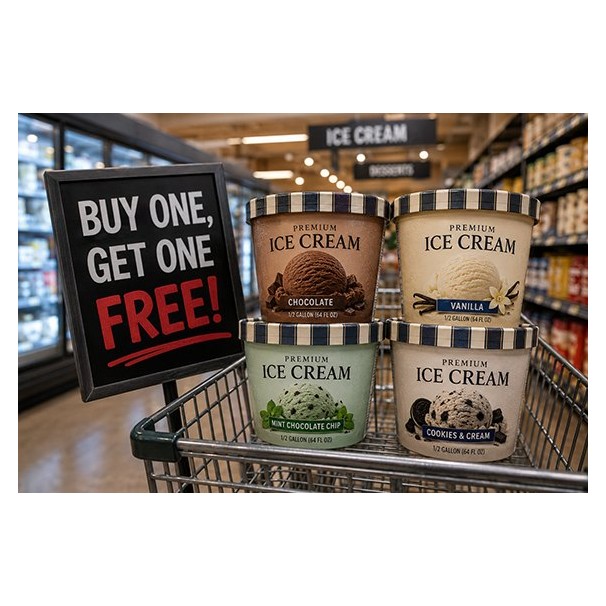
If she sends me to the grocery store for a gallon of milk, there’s a decent chance I’ll come home with four half-gallons of ice cream because they were Buy One, Get One Free. In my mind, I didn’t spend extra money—I saved money.
She sees it differently.
Her response is usually something along the lines of, “Tom…we didn’t need four half-gallons of ice cream.”
To which I reply, “But it was a BOGO!”
It’s become one of those lighthearted debates that has followed us for years, but it also raises a surprisingly important financial question:
Are Buy One, Get One deals really saving us money, or are they simply convincing us to spend more?
Retailers love BOGO promotions because they work. They create a sense of urgency and make us feel like we’re winning. Our brains are wired to love getting something for free, even if it wasn’t on the shopping list in the first place. Before long, the cart is fuller, the receipt is longer, and somehow we’ve spent far more than we intended.
The truth is that a BOGO isn’t automatically a bargain. It’s only a good deal if you were already planning to buy the item and you’ll actually use both of them. If the second item ends up expiring in the pantry, buried in the freezer, or donated during your next spring cleaning, that “free” item wasn’t really free at all.
This is where a little math can go a long way. Sometimes a BOGO beats every other price on the shelf. Other times, the store simply raises the regular price before offering the promotion, or a competing brand has a lower everyday price even without the flashy sign. A quick glance at the unit price—the cost per ounce, pound, or item—often tells the real story. It isn’t nearly as exciting as a giant yellow BOGO sign, but it usually tells the truth.
Of course, there are times when BOGOs are fantastic. Household staples, canned goods, toiletries, paper products, frozen foods, and yes…even ice cream (according to Tom), can offer genuine savings. If you’ll use them anyway and they fit within your budget, stocking up can reduce future grocery bills. Just don’t let the deal convince you to buy something simply because it feels like an opportunity. As the old saying goes, spending $20 to save $10 still costs you $20.
The same principle applies far beyond the grocery store. Car dealerships advertise incentives. Furniture stores hold “one weekend only” sales every other weekend. Online retailers count down the final minutes of deals that somehow return tomorrow. Marketing is designed to make us act emotionally instead of thoughtfully. The most successful savers learn to pause, ask whether they actually need the purchase, and compare prices before reaching for their wallets.
Here’s a simple challenge for September. Before buying anything because it’s “on sale,” ask yourself three questions:
- Was I planning to buy this anyway?
- Will I realistically use all of it?
- Would I still buy it if there weren’t a sale sign?
If the answer to all three is yes, congratulations—you may have found a genuine bargain. If not, the best deal may be leaving it on the shelf.
Much like successful investing, smart spending isn’t about chasing every opportunity that looks attractive. It’s about making thoughtful decisions that align with your long-term goals instead of reacting to flashy headlines or clever marketing. A Certified Financial Planner® professional can help you develop those habits, ensuring that your financial decisions—whether they’re about grocery shopping, major purchases, or investing—work together to build lasting financial success.