

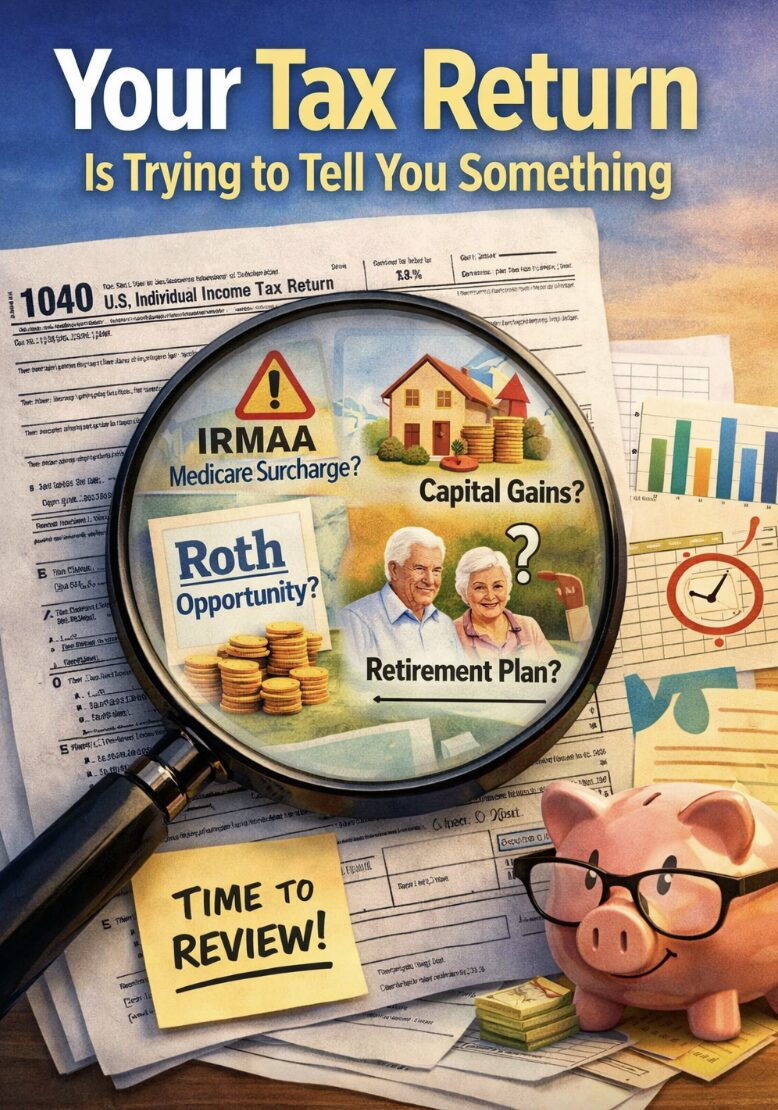
YOUR TAX RETURN IS TRYING TO TELL YOU SOMETHING
Every spring, most people treat their tax return like a task to finish and forget. File it, sign it, move on.
But a tax return isn’t just paperwork—it’s a financial diagnostic. It quietly shows where things are working, where they’re drifting, and where opportunities may be hiding.
Certified Financial Planners® don’t view a return as the end of tax season. We see it as the starting point for smarter planning.
WHAT YOUR TAX RETURN MAY BE TELLING YOU
“Why Did I Owe This Year?”
Frustrating—but incredibly useful.
It can reveal:
• Under-withholding or estimated payments that missed the mark
• Rising income that hasn’t been incorporated into planning
• Investment gains that weren’t coordinated with tax strategy
• A retirement income plan that isn’t tax-efficient
In short: Life changed, but the plan didn’t catch up yet.
“My Income Is Higher Than I Realized.”
This happens often—and it matters more than most people think.
Higher income can affect:
• Medicare premium surcharges later (IRMAA)
• Social Security taxation
• Qualified dividends capital gains rates
• Eligibility for credits and deductions
None of these come with flashing warning signs—but they’re embedded in the numbers.
“Nothing Really Changed… But We’re Paying More.”
Usually, something did change:
• Required minimum distributions began
• Bonuses or stock compensation increased
• Investment income grew
• A new phase of retirement income started
The return captures those shifts, even when they don’t feel obvious
“We Had A Big Refund…Again.”
Nice—but worth a closer look.
It may mean:
• Cash flow could be optimized during the year
• Roth opportunities were missed
• Charitable or gifting strategies weren’t used efficiently
• You gave the IRS an interest-free loan
A refund feels good. A smarter plan feels better.
What CFPs® Actually Look For
Most people think a tax return answers one question:
“What Do I Owe?”
We look for much more:
• Are we positioned correctly for retirement income?
• Are Roth conversions worth considering?
• Are investments aligned with current tax brackets?
• Are risks forming that won’t show up for several years?
A return is a snapshot—but it also shows direction.
A Note About Multi-Generational Planning
Many clients first come to us as parents. Over time, their adult children—often married with families of their own—become clients, as well.
Each relationship is confidential and planned independently. Parents and adult children aren’t planning “together”—they’re each making decisions within their own financial lives, income levels, and priorities.
That means:
• A parent nearing retirement may face distribution and Medicare decisions
• An adult child may be navigating peak earning years, equity comp, and young-family planning
• Both may have tax opportunities at the same time—but for completely different reasons
A tax return helps us guide each household appropriately, based on their own plan.
A client recently hired us just to prepare and file their tax return.
While preparing the return, we noticed:
• A capital gain that shifted their bracket
• A Roth opportunity worth exploring
• Income levels that could affect future Medicare premiums
Nothing was “wrong.” But several smart decisions were waiting to be made.
That’s the real value of reviewing the return through a planning lens.
One Simple Action Step
If you do one thing this month, don’t file your return and forget it. Use it.
Your tax return can help guide decisions about:
• income timing
• investments
• retirement strategy
• tax planning for the year ahead
The best time to plan for taxes … is right after you see them.
Consider Hiring A CFP®
Find a CFP®, send them a copy of your return, and ask them to do a brief planning scan.
No forms. No pressure. Just a conversation about:
• opportunities you might be missing
• risks that may be forming
• and how everything fits into your plan going forward
For many clients, this short review becomes one of the most valuable conversations of the year.
Your tax return is already telling a story.
We’re here to help interpret what it means for what comes next.